

CrowdStrike has long been a household name in endpoint detection and response (EDR). Its Falcon platform is widely recognized for threat intelligence, real-time monitoring, and detection capabilities. Yet as the cyber threat landscape evolves in 2025, organizations are beginning to reassess whether a single-point EDR solution is enough—or whether they need a broader, more integrated approach to security.
The Limits of EDR in 2025
EDR tools like CrowdStrike excel at detecting and responding to suspicious activity. But today’s enterprise IT environment is much more complex:
Hybrid infrastructures spanning on-premises, cloud, and SaaS applications
Expanding attack surfaces with mobile devices, IoT, and remote work endpoints
Identity-based threats like credential theft and privilege escalation
The challenge? EDR tools were never designed to manage these dimensions on their own. They detect threats once they occur but lack built-in prevention, backup, and recovery functions—critical for organizations that cannot afford downtime.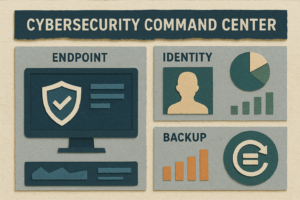
What Security Buyers Are Asking For
Forward-looking CIOs, CISOs, and IT directors are pushing for consolidation of tools and vendors. Instead of patchworking together separate products for EDR, identity, data protection, and recovery, they want platform solutions that offer:
End-to-end protection: from prevention to backup and disaster recovery
Identity security integration: protecting user access alongside device health
AI-driven automation: not just alerts, but autonomous containment and response
Unified visibility: a single pane of glass for monitoring all endpoints and workloads
Regulatory compliance features: automated reporting and enforcement of data security rules
CrowdStrike’s EDR remains strong in detection, but competitors are increasingly offering wider coverage—folding in endpoint management, identity threat detection, backup, and resilience.
The Market Shift: Platforms vs Point Solutions
Analysts have noted a shift toward platformization in cybersecurity. Companies like Palo Alto Networks, Microsoft, and emerging players are consolidating endpoint, identity, and cloud workload protection into single unified platforms.
This trend is reshaping buying decisions: enterprises are weary of managing dozens of vendors that don’t fully integrate. Instead, they want lower cost of ownership, faster incident response, and guaranteed recovery from a unified vendor approach.
For potential CrowdStrike customers, this raises a critical question: Do we want to rely on a specialized EDR tool, or do we want a complete security and resilience platform?
Evaluating Alternatives: What to Look For
If you’re reviewing your endpoint security strategy in 2025, here are five questions to ask:
Does it cover the full lifecycle? Monitoring is valuable, but can it prevent, isolate, and recover automatically?
How well does it integrate? Does the solution natively align with identity platforms, cloud workloads, and SaaS environments?
What’s the recovery story? In case of ransomware or outage, can you roll back and restore data instantly?
Can it scale with AI? Does the platform adapt autonomously with AI-driven analytics, not just send alerts?
Does it simplify, or add complexity? Will adopting the tool reduce vendor sprawl, or just add another silo?
The Future: Security + Resilience, Not Just Detection
The reality is clear: cyberattacks are no longer a matter of if, but when. In this environment, businesses need holistic security platforms that combine detection with prevention, backup, and recovery.
While CrowdStrike has strengths in EDR and threat intelligence, forward-looking companies are asking for more complete solutions that deliver not just visibility into attacks, but the confidence that their data, operations, and people remain safe and resilient no matter what happens.
For IT leaders planning their next moves in 2025, the takeaway is simple: endpoint security alone is not enough—you need a security and resilience platform.